
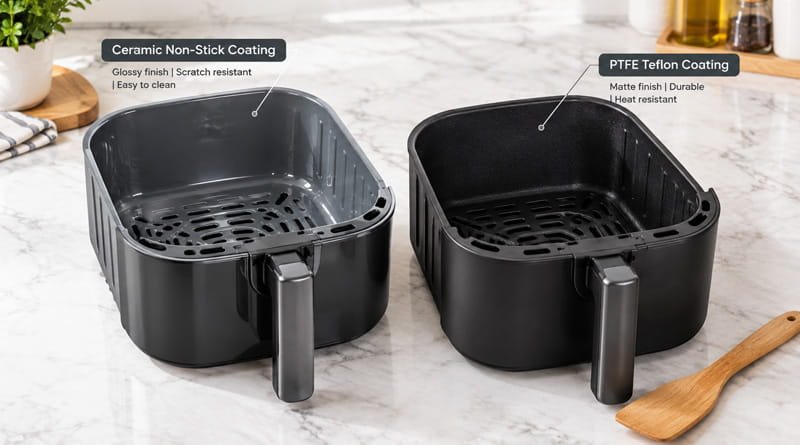
When Indian households upgrade to oil-free cooking, the primary focus is usually on basket capacity, heating wattage, and digital touchscreen controls. However, the most critical decision for your family’s long-term health is understanding the ceramic vs teflon air fryer debate. The material coating the inside of your frying basket dictates how your food is cooked and whether invisible chemicals are leaching into your daily meals.
Traditional air fryers have relied on Teflon (PTFE) for years to prevent paneer, chicken, and samosas from sticking to the basket floor. But as health awareness grows in 2026, a massive shift toward 100% toxin-free ceramic coatings has disrupted the market. Solving the ceramic vs teflon air fryer puzzle is essential before making your next kitchen appliance investment.
Table of Contents
★ QUICK RECOMMENDATION: AT A GLANCE TOP CERAMIC PICK
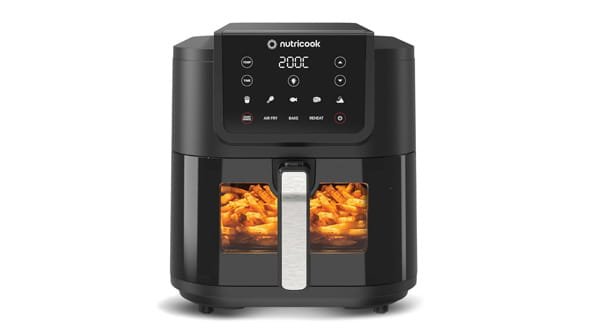
🏆 #1 Best Toxin-Free Ceramic Air Fryer in India: Nutricook Essential (4.5L & 7.6L)
Features a 100% PTFE-free and PFOA-free ceramic non-stick basket, ensuring zero microplastics or toxic fumes enter your food, even at 200°C temperatures.
What Are These Non-Stick Coatings Made Of?
To understand the ceramic vs teflon air fryer health implications, we must break down the chemical engineering behind these two popular non-stick surfaces.
When exploring the ceramic vs teflon air fryer options on the market, understanding the underlying materials is the first step to making a healthy choice.
What is Teflon (PTFE)?
Teflon is a brand name for a synthetic chemical called Polytetrafluoroethylene (PTFE). It is a type of plastic that is incredibly slick and repels water and oil, making it the industry standard for non-stick cookware worldwide. Historically, PTFE was manufactured using a chemical called PFOA, which has been linked to severe health issues. While modern Teflon is PFOA-free, it is still a synthetic plastic polymer.
What is a Ceramic Coating?
Despite the name, a ceramic air fryer basket is not made of pure clay or pottery. Instead, it features a metal core (usually aluminum) that is spray-coated with a sol-gel solution derived from natural sand and silica. Once cured in an oven, this silica creates a slick, high-gloss finish that mimics the non-stick properties of Teflon but is 100% free from synthetic plastics, PFAS, and PTFE.
If you are currently researching specific brands that use these coatings, read our master Air Fryer Buying Guide India: 5 Best Models to compare the top-selling units side-by-side.
Ceramic vs Teflon Air Fryer: Health Risks & Chemical Safety
The most heavily debated topic in the ceramic vs teflon air fryer comparison is chemical safety under high-heat cooking conditions. Air fryers use rapid convection fans to circulate air at temperatures reaching 200°C to 220°C.
The Problem with PTFE at High Temperatures
Food-grade PTFE (Teflon) is deemed safe by health authorities for cooking up to 260°C. Because most air fryers max out at 200°C, a high-quality PTFE basket is completely safe for daily use. However, the risk arises when the coating gets scratched or damaged. If a cheap Teflon basket begins to peel, microscopic plastic flakes (microplastics) can detach and mix with your food. Furthermore, if a Teflon pan accidentally overheats, it can release toxic fumes known to cause “Teflon flu.”
The Ceramic Safety Advantage
Ceramic coatings are inorganic. Because they are derived from natural sand, they contain zero synthetic plastics. Even if a ceramic basket accidentally overheats to 400°C, it will never release toxic fumes or chemical byproducts. There is absolutely zero risk of PTFE, PFOA, or PFAS leaching into your food. For health-conscious buyers, pregnant women, and parents preparing snacks for toddlers, ceramic is the ultimate peace-of-mind choice.
⚡ BEST PREMIUM TEFLON (PTFE) ALTERNATIVE
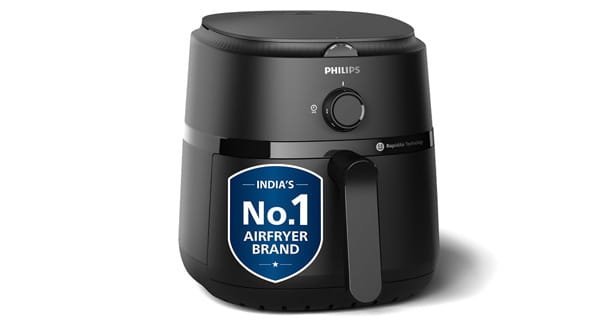
⚡ Best Pick for Heavy-Duty High-Grade PTFE: Philips Air Fryer NA120/00
If you prefer traditional non-stick, Philips uses a highly durable, medical-grade PTFE coating that resists peeling and scratching far better than cheap unbranded models.
Durability & Scratch Resistance in Indian Kitchens
Another key aspect of the ceramic vs teflon air fryer discussion is how well the basket resists peeling after months of cooking with heavy Indian spices
Indian cooking involves heavy marinades featuring turmeric, red chili powder, mustard oil, and acidic ingredients like yogurt and lemon juice. How a basket holds up to these ingredients is a vital part of the ceramic vs teflon air fryer decision.
Scratching and Peeling
- Teflon Baskets: PTFE is a soft polymer. If you use a metal spoon to scoop out French fries or a hard wire scrubber to wash off dried paneer tikka, you will instantly scratch the Teflon. Once scratched, it begins to peel rapidly.
- Ceramic Baskets: The silica-based glaze on a ceramic basket is significantly harder than PTFE. It resists scratching much better, but it is slightly more brittle. If you drop a ceramic basket on a hard kitchen tile floor, the coating can chip.
If you are comparing large-capacity models for a joint family, read our detailed head-to-head review on the Nutricook Slim XL 7.6L vs Instant Vortex Plus 6L to see how ceramic and Teflon perform in 6-litre+ machines.
Cleaning and Maintenance Best Practices
To get the longest life out of your appliance, regardless of where you stand in the ceramic vs teflon air fryer debate, you must use soft sponges instead of wire scrubbers.
Regardless of which side of the ceramic vs teflon air fryer debate you choose, maintaining the non-stick surface properly extends the life of your appliance by years.
1. Avoid Abrasive Scrubbers
Never use metal steel wool or abrasive green scrubbing pads on your air fryer basket. Allow the basket to cool down, fill it with warm water and mild dish soap, let it soak for 15 minutes, and wipe it clean with a soft yellow sponge.
2. Avoid Aerosol Cooking Sprays
Do not use cheap aerosol cooking sprays (like PAM) inside your air fryer. These sprays contain chemical propellants and emulsifiers that cook onto the non-stick surface, leaving a sticky, permanent residue that ruins both Teflon and Ceramic coatings over time. Instead, use a silicone brush to apply pure oil, or buy a manual oil spritzer bottle.
For recommendations on healthy cooking oils to use in your air fryer, check out our guide on the 5 Best Cold Pressed Oils for Cooking in India.
Final Verdict: Which Air Fryer Coating is Best?
Solving the ceramic vs teflon air fryer dilemma ultimately comes down to your personal health priorities and budget.
Choose a Ceramic Air Fryer if:
- You want 100% assurance that zero microplastics, PTFE, or PFAS chemicals will touch your family’s food.
- You are willing to pay a slight premium for health-first innovations.
- You want a basket that easily wipes clean from heavy, sticky Indian marinades.
Choose a Teflon (PTFE) Air Fryer if:
- You are on a strict budget (most air fryers under ₹4,000 use standard PTFE).
- You are buying a highly trusted brand like Philips that uses medical-grade, highly durable PTFE.
- You are extremely careful to only use silicone or wooden spatulas and soft sponges during cleaning.
Whichever technology you choose, upgrading to an air fryer will drastically reduce your household oil consumption and improve your heart health. With the upcoming festive sales on Amazon India, you can secure premium models of both types at massive discounts.
🎯 FINAL VERDICT: READY TO BUY ON AMAZON INDIA?